A Tribute to Automotive Legends
Automotive history is full of brands that couldn’t keep the lights on, even while producing some truly remarkable machines. Maybe it was changing trends, a rough economy, or a launch that went sideways – we’re looking at you, DeLorean DMC-12. Whatever the reason, the legendary cars on this list weren’t enough to save their brands from extinction.
We’ve deliberately avoided the obvious choices like the DeLorean, and you won’t find mainstream cars like the Pontiac Grand Prix or Mercury Cougar here either. Instead, we’ve focused on oddball, lesser-known rides alongside a handful of classics. To keep things interesting, the list spans brands from across the globe, offering a glimpse of a diverse slice of automotive history that crosses continents and decades.
The vehicles on this list are arranged in alphabetical order by their manufacturer – there’s no ranking here, just an appreciation of some truly memorable machines.
10
Bertone Mantide
Exotic Design Belies Corvette Roots
|
Engine |
Supercharged 6.2-liter V8 |
|---|---|
|
Power |
638 hp |
|
Torque |
604 lb-ft |
|
0-60 mph |
3.2 seconds |
Jason Castriota is perhaps one of the greatest American automotive designers of the modern era, though he doesn’t quite have the same recognition as the likes of Chris Bangle, Tom Gale, or Ralph Gilles. While you may not know his name, you’ll definitely know his work. His resumé includes cars like the Ferrari P4/5 by Pininfarina and SSC Tuatara, and, of course, the Bertone Mantide.
The Mantide is the result of what happens when you give a talented designer pretty much free rein to build their dream car. Not surprisingly, it looks like nothing else and hasn’t aged a bit, looking as fresh as it did when it debuted at Auto Shanghai 2009.
That’s made all the more impressive when you consider the Mantide is based on the bones of a C6 Chevrolet Corvette ZR1 – and actually weighs around 250 pounds less than the already light donor ‘Vette thanks to a body that’s almost entirely carbon fiber.
Castriota designed the Mantide while he was serving as head of Stile Bertone, which went bankrupt in 2012, a victim of the global financial crisis. The car too suffered as the market for buyers willing to drop huge sums on exotic machines dried up. A production run of 10 examples was planned, though only one car was built, plus the original concept.
9
Cizeta V16T
A V16 Supercar Well Before Bugatti Dreamed Up The Tourbillon
|
Engine |
6.0-liter V16 |
|---|---|
|
Power |
540 hp |
|
Torque |
400 lb-ft |
|
0-60 mph |
4 seconds |
Horacio Pagani wasn’t the only former Lamborghini engineer to go off and start his own supercar company. Before him, Claudio Zampolli worked for Lamborghini and later started his own business servicing exotic machines, eventually building his own under the Cizeta brand. Cizeta’s only product was the V16T supercar, which launched in 1991. It had a lot going for it, including a unique V16 engine and a design by Miura and Countach designer Marcello Gandini.
However, V16T production ended by 1993, a year before Cizeta went bankrupt. Fewer than a dozen were built during the short run, though Zampolli would later go on to produce several continuation examples. To be fair to Zampolli, economic conditions and a market not quite ready to pay for cars costing multiple times the average home also resulted in some iconic supercars launched at the time, like the Bugatti EB 110, Jaguar XJ220, and McLaren F1, also failing to fire up the sales charts.
8
Gumpert Apollo Sport
Set A Nürburgring Lap Record At Launch
|
Engine |
Twin-turbocharged 4.2-liter V8 |
|---|---|
|
Power |
691 hp |
|
Torque |
627 lb-ft |
|
0-60 mph |
3.1 seconds |
Though it may lack the storied lineage or glamour of classic supercars, the Gumpert Apollo has undeniably carved out its own legacy in the world of high-performance automobiles. With its raw design and performance that rivals contemporary top models from Ferrari and Porsche, the Apollo has earned acclaim as a remarkable feat of engineering. The company was founded in the early 2000s by former Audi engineer Roland Gumpert, whose goal was to deliver a supercar that could match a race car on the track while remaining fully legal on the road.
Using his connections with Audi, Gumpert gained access to the automaker’s 4.2-liter V8, which he twin-turbocharged to produce 641 hp in the base Apollo, with even higher outputs for the flagship Apollo Sport and a racing variant. Initial sales were promising, with Gumpert hinting at plans to enter the US market and having its performance further cemented by an independent test from Germany’s Sport-Auto, which clocked a 7:11.57 Nürburgring lap time following 2009’s launch of the Gumpert Sport version – a record for a production car at the time.
Gumpert then followed up with a new, more polished design called the Tornante, but by then the lasting effects of the global financial crisis resulted in the company’s insolvency in 2012. The assets were eventually sold to Chinese investors, who relaunched the company under the Apollo name.
7
Holden Commodore SS
Sold In America As The Chevy SS
|
Engine |
6.2-liter V8 |
|---|---|
|
Power |
408 hp |
|
Torque |
420 lb-ft |
|
0-60 mph |
4.5 seconds |
Holden officially died in 2021 as part of parent company General Motors’ exit from right-hand-drive markets around the globe, but the brand was already dead in many ways when it ceased building the Commodore in Australia in 2017.
The Commodore nameplate lived on for a few more years, but as a rebadged Opel Insignia – a car the US also received as the Buick Regal. The final Australian-built Commodore was the VF generation, and it was a cracker of a sedan in its SS guise. There were also a wagon and a pickup, or “ute,” as Australians call that body style.
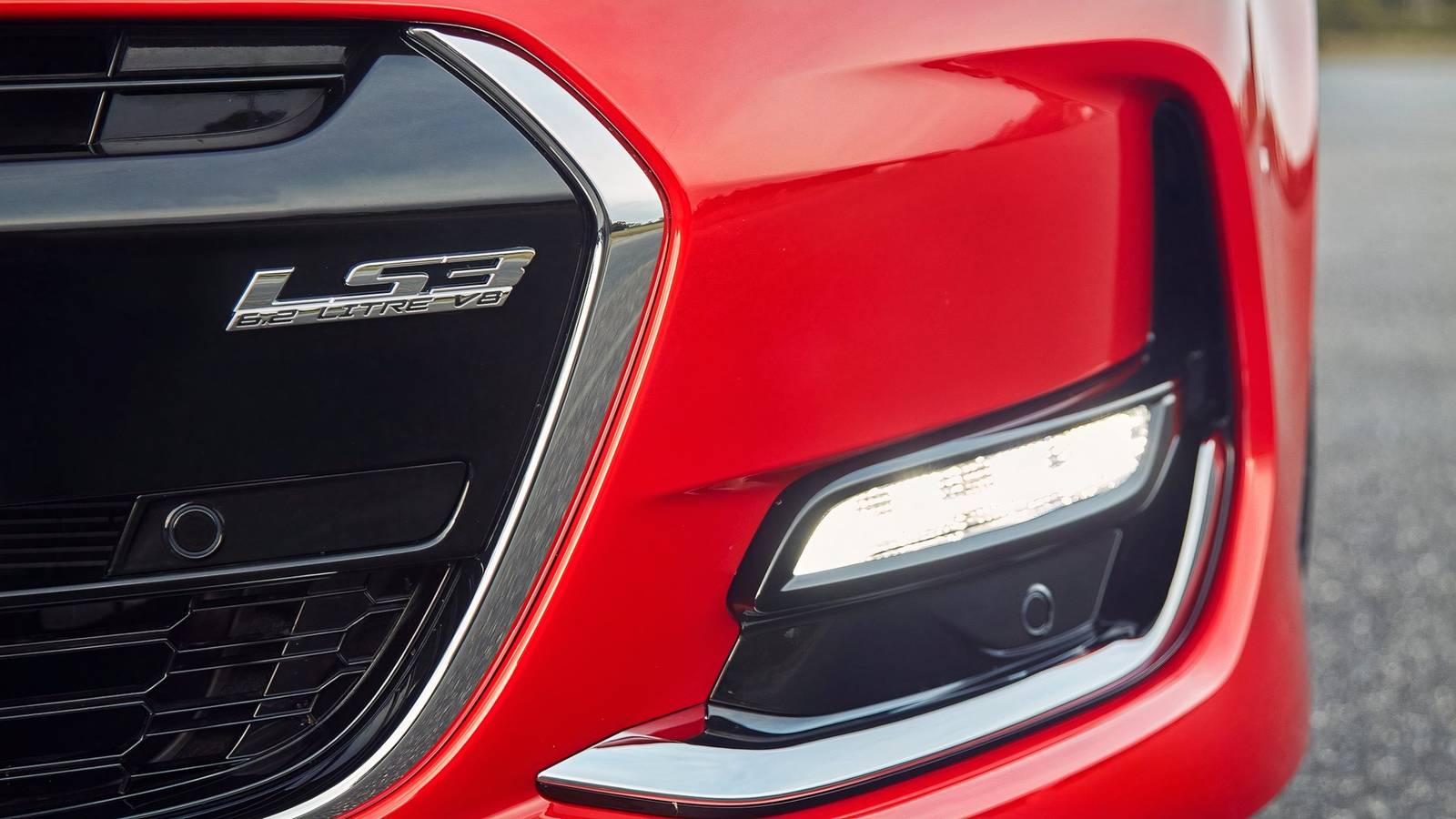
Americans got a taste of the Commodore SS in the form of the Chevrolet SS, but only the sedan. Power came from an LS3 V8, with drive sent to the rear wheels via a standard six-speed manual or an available six-speed automatic. The car delivers all the comfort needed for a long drive, but it can also dial up loads of torque when required, with a proper V8 roar to match – and a crackling intensity at higher revs.
Sadly, sales figures for the Commodore were never high enough to justify continued production, and Holden’s Australian plant was shuttered as a result.
6
Plymouth Hemi ‘Cuda
Muscle Car Royalty
|
Engine |
7.0-liter V8 |
|---|---|
|
Power |
425 hp |
|
Torque |
490 lb-ft |
|
0-60 mph |
5.6 seconds |
Plymouth rolled out the Barracuda in 1964 to take on the Ford Mustang – actually revealing it a few weeks before Ford’s pony car – but it was the third-generation model launched in 1970 that really made the car a star. With its smoother, more curved styling and a lineup packed with high-performance variants, including the Hemi ‘Cuda powered by the legendary 426 Hemi V8, Plymouth delivered a car that would go to become an icon. Uber-rare convertibles today fetch millions at auctions.
But by the mid-1970s, the Barracuda’s star had begun to fade. Rising insurance costs, tightening emissions regulations, and shifting market tastes made Plymouth’s pony car increasingly difficult to sustain, and the third-generation ended up being the last.
Plymouth shifted its focus toward more mainstream, mass-market vehicles, a strategy that kept the brand afloat for a time but ultimately could not prevent its demise in 2001. In the years since, the renewed success of the Dodge Challenger sparked speculation and even discussions within Chrysler about reviving the ‘Cuda as a modern successor – right up to today, in fact.
5
Pontiac GTO
Widely Considered The Progenitor Of The Muscle Car Era
|
Engine |
6.4-liter V8 |
|---|---|
|
Power |
348 hp |
|
Torque |
440 lb-ft |
|
0-60 mph |
6.5 seconds |
When it comes to all-time muscle car legends, the Pontiac GTO stakes its claim near the summit. Often hailed as the grandfather of the muscle car era, the GTO made its debut in 1964 as a package on the humble Tempest, instantly turning it into a 325-horsepower beast. The use of the GTO name was actually the idea of John DeLorean, who was working for General Motors at the time.
Fast forward a few years, and the second-generation GTO became its own model, introducing us to 1969’s The Judge. It featured a 400-cubic-inch V8, a rear spoiler, and the signature Carousel Red paint option.
There would be three more generations of the GTO, with the final iteration being a rebadged Holden Monaro. At the urging of Bob Lutz, Pontiac began selling rebadged versions of some of Holden’s hotter models, starting with the Monaro as the GTO for the 2004 model year and later the Commodore sedan as the G8 in 2008. There were even plans to bring over the Commodore’s wagon and pickup body styles, but the global financial crisis and GM’s bankruptcy ultimately led to Pontiac’s demise.
4
Saab 900 Turbo
The Essence Of Saab
|
Engine |
Turbocharged 2.0-liter Inline-4 |
|---|---|
|
Power |
145 hp |
|
Torque |
174 lb-ft |
|
0-60 mph |
8.7 seconds |
Saab launched the 900 in 1978 as the successor to its long-running 99, and the car managed to retain the quirkiness and engineering-led design the brand was renowned for. Its distinctive sloped nose, wraparound windshield, and aviation-inspired cockpit reflected Saab’s roots as an aircraft manufacturer (which still exists today as a defense company). The lineup also included the 900 Turbo, one of the first mainstream small cars with turbocharged power. Lightweight and agile, it was surprisingly sporty while remaining efficient and practical.
Many enthusiasts fondly remember spotting a 900 Turbo scooting past – often driven by a teacher or university professor (now they all have Volvos) – with that unmistakable turbo whine and endearingly awkward shape. But when General Motors took over Saab in 1989, much of the eccentricity was squeezed out to make room for mainstream appeal. It hurt sales and Saab was near death when GM offloaded it to a willing Spyker in 2010, though with Spyker lacking the funds to turn Saab around, bankruptcy ensued and Saab’s assets were sold to Chinese interests.
3
Saturn Sky
GM’s Global Sports Car
|
Engine |
2.4-liter Inline-4 |
|---|---|
|
Power |
177 hp |
|
Torque |
166 lb-ft |
|
0-60 mph |
7 seconds |
Back in the 2000s, General Motors wanted to develop a small, lightweight sports car it could market in Asia and Europe, as well as the US. That led the automaker to develop a rear-wheel-drive platform known as Kappa, designed to support an open-top body but for cost constraints only with left-hand drive, thus excluding markets like the UK and Australia.
The Kappa platform made its debut in the 2006 Pontiac Solstice and was followed quickly by the sibling 2007 Saturn Sky – probably the only exciting Saturn launched prior to the brand’s demise as part of GM’s 2010 bankruptcy.
Unlike the Solstice, the Sky was developed with global markets in mind. It was rebadged as the Opel GT for Europe and as the Daewoo G2X for South Korea. While the cars were fun and looked good, they had one major shortcoming: a hefty curb weight. At around 2,900 lbs, the cars weighed around 400 lbs more than a rival Mazda MX-5 Miata, and you felt this behind the wheel. When production finally wound up, it also meant the end for GM’s plant in Wilmington, Delaware, after more than 60 years.
2
TVR Tuscan Speed Six (Mk II)
Only For The Brave
|
Engine |
4.0-liter Inline-6 |
|---|---|
|
Power |
400 hp |
|
Torque |
315 lb-ft |
|
0-60 mph |
3.6 seconds |
The TVR Tuscan Speed Six was a lightweight, high-revving sports car powered by TVR’s own inline-six engine. Over its production, it evolved into the Tuscan 2, featuring improved aerodynamics, suspension, and refinement while retaining its raw performance – and signature lack of electronic aids, including even ABS. Its mechanicals were shared with the TVR Sagaris, a track-focused extreme sports car. Alongside the Tuscan 2, Sagaris, and a few remaining Griffith 500 and Cerbera examples, these models represented TVR’s final cars before production in its historic home of Blackpool, UK, finally ended in 2006.
While there were efforts to revive TVR production with new owners in recent years, starting with a modern Griffith sports car powered by Forde’s Coyote V8, a lack of funding and a clear plan have put that effort on hold. As for the Tuscan Speed Six, given it was introduced in 1999, earlier examples are now eligible for US import under the 25-year rule, and there’s even a company in Las Vegas, TVR Garage, set up to source and import TVRs into the US.
1
Vector W8 Twin Turbo
America’s First Supercar
|
Engine |
Twin-turbocharged 6.0-liter V8 |
|---|---|
|
Power |
625 hp |
|
Torque |
649 lb-ft |
|
0-60 mph |
4 seconds |
Inventor and serial entrepreneur Jerry Wiegert spent decades pursuing his dream of creating an American supercar. He unveiled his first concept in 1972, boasting a lightweight mid-engine chassis, a transversely mounted twin-turbocharged V8, and a claimed top speed of over 200 mph. The concept eventually evolved into the Vector W8, which made it to production in the late 1980s.
While it delivered impressive performance, it suffered from overheating issues and delivery delays, and by 1992, the price had climbed to $450,000 – just as demand was waning.
Wiegert attempted to launch a follow-up model, previewing it at the 1993 Geneva Motor Show with the WX-3 prototype, but soon lost control of Vector to the Indonesian firm MegaTech – which, at the time, also purchased Lamborghini from Chrysler.
Under MegaTech’s ownership, Vector introduced the M12 in 1996, powered by a Lamborghini V12, but a lack of funding led to the company’s demise soon after. Wiegert eventually regained control of the Vector name in the 2000s, and while he promised to launch a new generation of the W8 – going so far as to display a prototype – he never managed to bring the project to production.
Sources: Bertone, Cizeta, GM, Gumpert, Stellantis, Saab, TVR, Vector
link